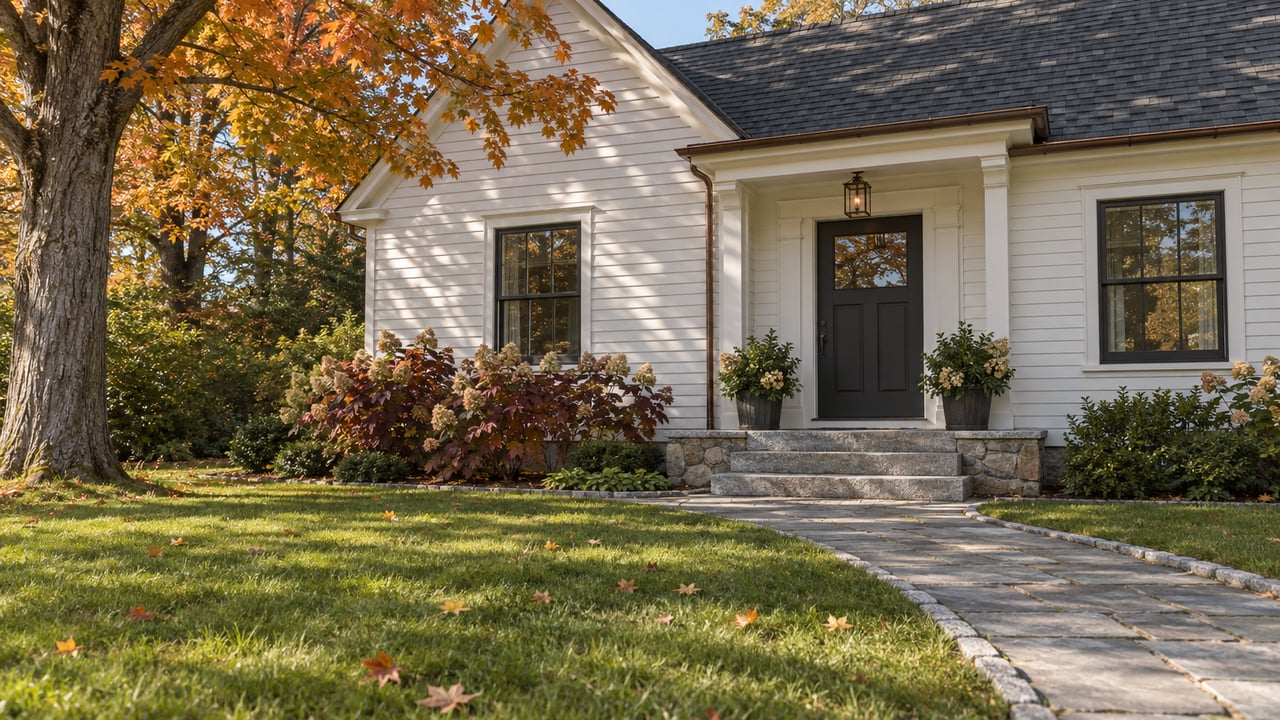
Moose Hill Farm: Sharon's Community Garden and Sunday Walks
October 8, 2026
October 8, 2026
"There are herbs you might not be familiar with, and they swap tips, and they swap recipes." That is how Donna Whitehead, Sharon's communications specialist, described the people who work the Sharon Community Garden. The garden launched in 1974 as a program run separately from the town. This year it grew its first crops somewhere new, on a hillside at The Trustees' Moose Hill Farm.
The move changed more than the garden's address. The garden had sat inside a town park. Now it sits inside a working agricultural reservation of 347 acres, with a deer fence, organic-only rules, a preschool in the farmhouse, and a seasonal deer management program. Plots inside the fence are for Sharon residents who hold an assignment. The rest of the hill is free and open to everyone from sunrise to sunset.
The garden's old home at Deborah Sampson Park was set aside for a new multi-use sports field. The town describes the project as a grass multipurpose field with a full soccer diamond and a softball diamond. At the Annual Town Meeting on May 4, 2026, voters moved $238,600 of unspent tennis and basketball court resurfacing money to the project. That raised the field's appropriation from $1,130,000 to $1,368,600. That figure is the amount the town has authorized, not a final contract price.
The schedule has slipped. The town's January 2026 bid manual planned for the contractor to arrive by April 6, 2026, and to finish by early July 2026, not counting the seeded grass areas. The July issue of the town newsletter, Sharon Matters, said installation was underway and that the field should be playable in "mid to late 2027." Grass needs time to take hold, so the gap between building a field and playing on it fits the bid manual's exclusion of seeded areas.
Work on the garden's new site started in January, so it would be ready for spring planting. The Recreation and Conservation departments had contacted The Trustees during the site search, and The Trustees were interested right away.
The arrangement now has three partners. The town signed an initial 10-year lease with The Trustees. The town appropriated $100,000 for the move, which paid for fencing and an irrigation system. The Department of Public Works prepared the ground, moved a shed, and supplied compost. Sharon Recreation now runs the program, handling registration, plot assignments, and communication with gardeners. Plot fees are meant to make the garden pay for itself. One plot is kept for The Trustees to use for education.
Sources count the plots differently. The Massachusetts Municipal Association reported about 80 families working a 110-plot garden. The town newsletter said "the garden's 80 plots were quickly claimed for this season." The safest summary is that roughly 80 households gardened there this year and every available plot was taken.
The farm setting comes with stricter rules. The Trustees prohibit synthetic pesticides, chemical fertilizers, biosolids compost, and second-generation anticoagulant rodenticides. Gardeners may use only OMRI-listed fertilizers and pest-control products. The garden's own policy page adds day-to-day rules:
The policy page has no date, so check with Sharon Recreation before treating these crop rules as final for next season. Visitors without a plot can still look. The Trustees allow non-gardeners to watch from outside the deer fence, and assigned gardeners can come in daily from sunrise to sunset during the growing season.
Moose Hill is 466 feet high. According to The Trustees, the only taller point between Boston and Providence is Great Blue Hill, at 635 feet. Six miles of trails run from the farmstead through restored woods to the hayfields and pastures on the hillside. From the upper hayfield, Great Blue Hill and the Boston skyline are both in view. The trail map names three marked routes:
| Trail | Length |
|---|---|
| Red Loop | 1.7 miles |
| Yellow Trail | 1.1 miles |
| Blue Trail | 0.7 miles |
The new garden fits a long run of farming on this ground. The Trustees describe a progression from homesteading to sheep farming to dairy during the 18th and 19th centuries. The cellar holes, foundation edges, stone walls, and open fields along the trails date from those years. In the 1940s, the farm kept a herd of Guernsey dairy cows.
The wooded slopes still hold some mature American chestnut trees, a species that once dominated forests across the eastern United States. In fall, look for the spiny husks of chestnuts on the ground. Wild turkey and white-tailed deer live on the property, and grassland birds nest in the summit fields.
Moose Hill Farm is a different property from Mass Audubon's Moose Hill Wildlife Sanctuary nearby. The Trustees' map marks the Audubon trails separately. The farm's entrance is at 396 Moose Hill Street, admission is free, and The Trustees suggest allowing at least an hour. The trail map is posted on a kiosk in the parking lot, and The Trustees suggest photographing it with your phone or downloading it before you go.
The farm is shared with more than walkers and gardeners, and in fall that affects when to visit. The Trustees run a deer management program on the property. A limited number of bow hunters with written permission may hunt from the first Monday in October through December, Monday through Saturday, from half an hour before sunrise until half an hour after sunset. Hunting is not allowed on Sundays, and safety signs are posted on the property. In 2026, the first Monday in October is October 5. Today, Sunday, October 4, is the last day before the hunting schedule begins. After that, Sundays are the only hunting-free days until the season ends.
The main farmhouse is home to the Cooperative Nature School at Moose Hill Farm, a year-round preschool whose children explore the pastures, meadows, woods, and wetlands every day. The Trustees ask visitors to stay out of areas where the children are working. Dogs are allowed on leash, and owners must clean up after them.
The farm also sells food. The Trustees list Moose Hill as one of their farm-share locations. The fall/winter meat share is three monthly pickups of 15 pounds each, 45 pounds in all, and pickup dates and times are emailed to members. In Sharon Heights, Simcha shows what a menu built on Ward's Berry Farm produce looks like. The Moose Hill share is a way to cook from a Sharon farm at home.
Sharon Recreation's listing says the season usually runs from April through November and that registration happens every year. The listing currently shows the program as unavailable, which fits a garden that is fully assigned in the middle of the season. For 2026, the garden's website told applicants to go through Sharon Recreation and said applications would open "February 26th." For 2027, the town has said only that registration will open "early next year." No fee amounts, plot sizes, or 2026 closing date have been published in the sources available, so the most reliable way to find out is to ask the garden directly. Its listed contacts are 781-436-2121 and [email protected].
Much of this news reached residents through Sharon Matters, the town's monthly online newsletter. The town started it to improve communication after a long-running local newspaper stopped publishing, and it is emailed to subscribers. Subscribing is the simplest way to catch the 2027 registration date. For more about town life away from the hill, see our notes on everyday routines around Lake Massapoag and our Sharon neighborhood page.
Land that has been a homestead, a sheep pasture, a dairy, and now a shared garden shows how long-term use can shape what a place becomes. At Talib Hussain Realty Group, we look at Sharon properties with the same long view, through careful research and an honest look at how land and buildings change over time. If you would like a calm, analytical conversation about your own property here, let's connect.
This article is general information, not legal, tax or financial advice. Consult a qualified professional about your situation.
Stay up to date on the latest real estate trends.


Rooted in trust, expertise, and sincere dedication, Talib brings a lifelong appreciation of what “home” means to every client and every move.