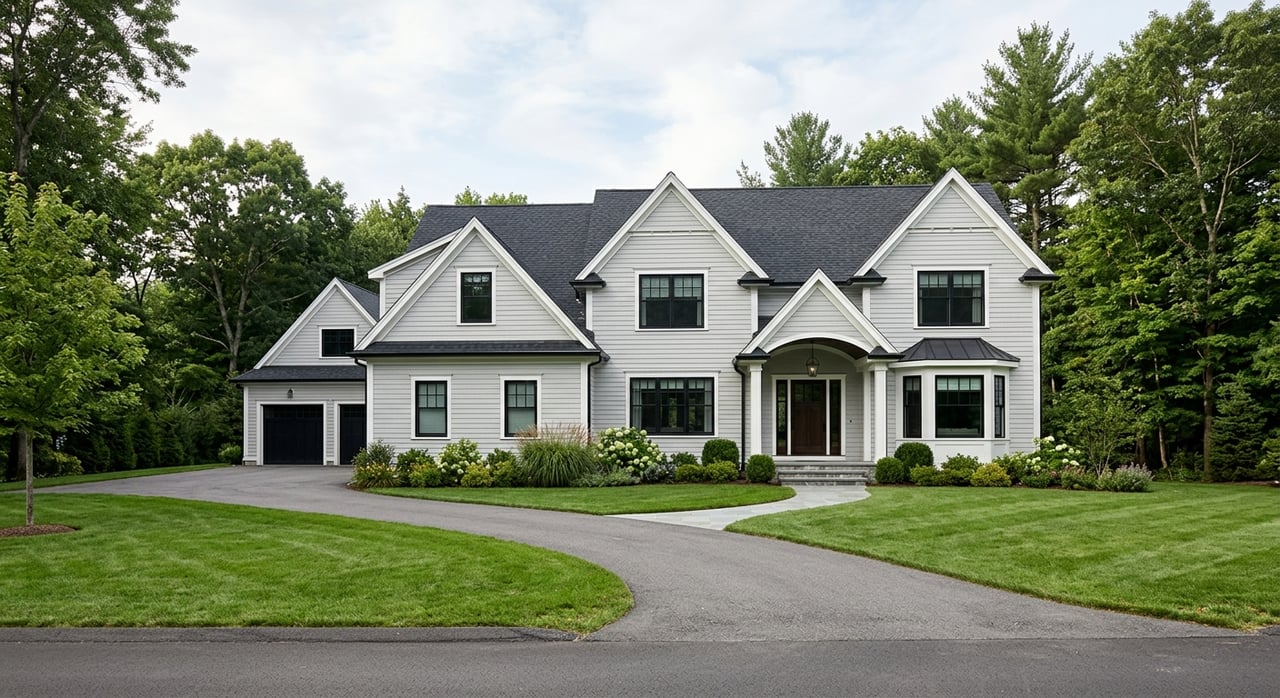
Is Sharon Right for Move-Up Buyers Near Boston?
May 28, 2026
May 28, 2026
Thinking about trading a tighter Boston-area setup for more space, better daily flow, and a home that can serve you longer? Sharon stands out for move-up buyers who want a suburban setting without giving up practical access to Boston. If you are weighing whether Sharon fits your next chapter, this guide will help you understand what the town offers, where the tradeoffs are, and how to evaluate the move with clear eyes. Let’s dive in.
Sharon offers a combination many move-up buyers want: mostly detached homes, a true commuter-town location, and meaningful access to open space. The town is about 22 miles south of Boston and has MBTA commuter rail service at Sharon station, with I-95, Route 1, Route 24, and Route 27 also shaping daily access.
That mix matters when you are trying to improve your quality of life without disconnecting from work, family, or the region. You can pursue more home and yard while still staying tied into Greater Boston. For many buyers coming from denser Boston suburbs, that balance is the main draw.
If your goal is to move into a detached home, Sharon lines up well with that plan. The town’s housing production plan identifies 5,203 single-family homes, compared with 335 condominiums, 116 two-family homes, 5 three-family homes, 3 four-to-eight-unit buildings, and 1 building with more than eight units.
In plain terms, Sharon is still primarily a single-family town. Public planning documents describe it as a mature suburban community centered on owner-occupied single-family homes, along with several condominium developments and a small number of cluster-style subdivisions.
That housing pattern can be attractive if you are moving up for more privacy, more interior space, or a different neighborhood feel. It is less attractive if you want a condo-heavy market with broad inventory across many price points and building types.
One reason Sharon feels lower density than many closer-in suburbs is zoning. Minimum lot areas are 20,000 square feet in Single Residence B, 40,000 square feet in Single Residence A and Suburban 1, 60,000 square feet in Rural 1 and Suburban 2, and 80,000 square feet in Rural 2.
There is also a General Residence district where single-family homes can be built on 8,000 square feet and two-family homes on 10,000 square feet. Still, outside the center, the zoning framework supports a more spread-out residential pattern.
For a move-up buyer, this often translates into a stronger sense of separation between homes and a more spacious streetscape. If you are coming from a smaller-lot suburb, that can feel like a real upgrade in day-to-day living.
Larger-lot zoning does not automatically mean every listing will sit on a large parcel, but it does shape the town over time. It influences what gets built, how neighborhoods feel, and how much of Sharon remains defined by detached housing rather than dense redevelopment.
That is important if your move is about more than square footage alone. You may be looking for a home that works better now and still feels right years from today. Sharon’s land-use pattern supports that kind of longer-term thinking.
Space is only part of the equation. For many move-up buyers, the bigger question is whether a larger home comes with an unworkable commute.
Sharon has a practical answer to that concern. The town identifies itself as a commuter town, and its main access network includes the MBTA commuter rail station along with I-95, Route 1, Route 24, and Route 27.
If your workweek includes Boston trips, regional meetings, or regular travel across suburban Greater Boston, that connectivity can make a meaningful difference. A move-up purchase works best when the home improves your life without creating daily friction, and location efficiency is part of that calculation.
Many suburbs talk about nature access. Sharon has the public facts to back it up.
The town has preserved more than 5,000 acres of protected open space. Its land-use table shows open space at 42.5% of assessed acreage, compared with 40.2% for residential land.
That is a major part of Sharon’s identity. For buyers who want room to breathe, recreation close to home, and a setting that feels less built out, this can be one of the town’s strongest long-term advantages.
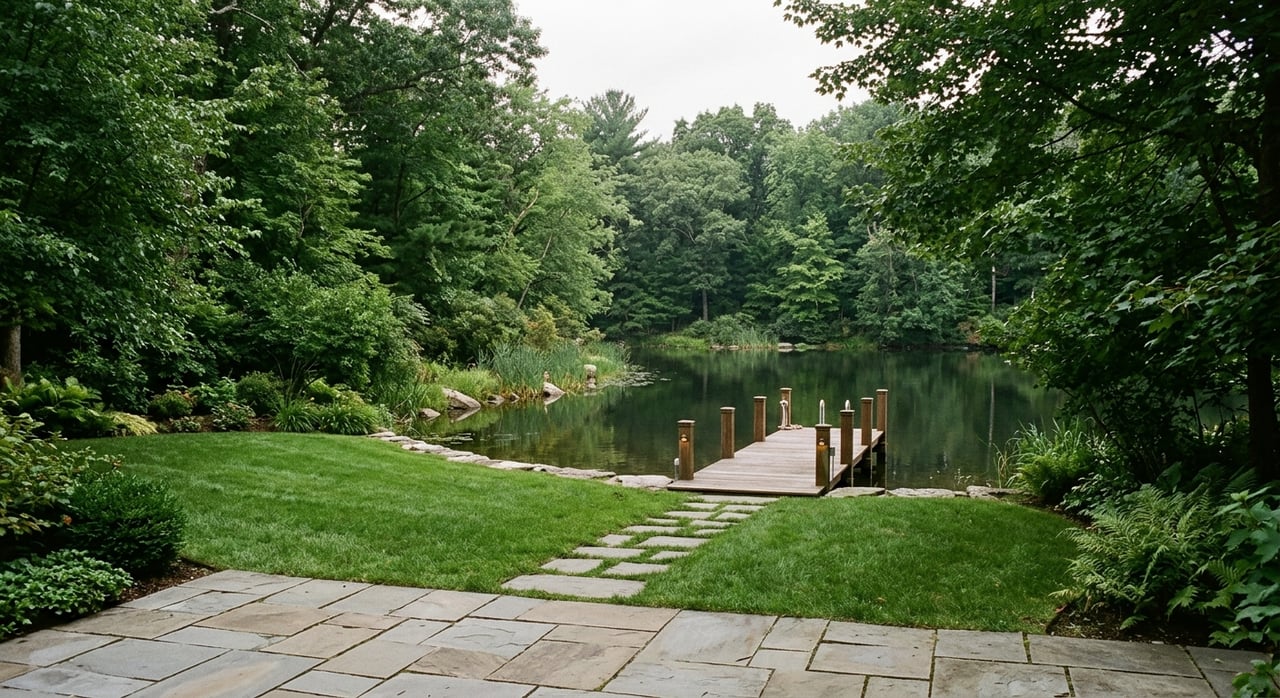
Lake Massapoag sits in the center of town and spans 353 acres. The town describes it as Sharon’s greatest natural recreation resource, with fishing, boating, swimming, sailing, windsurfing, camps, a yacht club, summer concerts, Memorial Park Beach, Community Center Beach, and a town boat launch ramp.
For move-up buyers, amenities like these can shape daily life in a very practical way. You are not just buying a larger house. You are also choosing the routines, recreation, and convenience that surround it.
Sharon also includes the 2,250-acre Massachusetts Audubon Moose Hill Wildlife Sanctuary and has 60% of Borderland State Park, or 1,260 acres, within its borders. The town also references the Warner, Massapoag Brook, and King Philip’s Rock nature trails.
This level of open-space access is not a minor feature. It supports a suburban lifestyle that feels active and grounded in the outdoors, which can be especially appealing when you are looking for a home that fits beyond the next few years.
Sharon may fit your space and lifestyle goals, but it is not a low-cost suburb. The Census Bureau’s 2020-2024 ACS places the median value of owner-occupied homes at $737,100.
The same source reports median monthly owner costs with a mortgage at $3,606. On top of that, Sharon’s FY2026 tax rate is $17.15 per $1,000 of assessed value, and the town levies a 1% Community Preservation Act surcharge on the property tax bill.
For move-up buyers, these numbers matter because monthly carrying cost can shape your comfort level just as much as purchase price. The right move is not simply buying more house. It is buying a better fit while keeping the full financial picture manageable.
Sharon’s planning documents suggest that buildable parcels are dwindling and that future housing growth is likely to be more clustered or multi-unit in select areas. That makes Sharon a different kind of market than a suburb with broad tracts of new construction.
If you are hoping for many brand-new detached-home options, Sharon may feel limited. The town’s public planning framework points more toward targeted growth than widespread expansion.
That can create competition for the kinds of homes many move-up buyers want most. It also means preparation matters. When the right property appears, you want to be ready to assess value, condition, and long-term fit quickly and calmly.
Sharon’s MBTA Communities planning points toward a multi-family or mixed-use overlay district in the town center. The town’s FAQ says the district must be 50 acres, with at least 40% within a half-mile of the commuter rail station.
For buyers, this offers useful context. Future housing growth is likely to be concentrated nearer the center and station area rather than spread evenly across town.
That does not erase Sharon’s single-family character, but it does help explain where change may happen over time. If you are comparing neighborhoods or trying to match a property to your long-range goals, this kind of planning context is worth understanding early.
Sharon can be a strong match if your move-up priorities include a detached home, a more spacious suburban setting, commuter access to Boston, and strong access to recreation and protected land. It is also a compelling option if you value the idea of buying into an established town rather than a place still being built out at scale.
It may be a weaker fit if you want abundant condo inventory, a dense town-center lifestyle, or a wide pipeline of new construction homes. It can also be a stretch if your budget leaves little room for higher monthly ownership costs.
The key is to evaluate Sharon not just as a name on a map, but as a lifestyle and financial decision. A strategic move-up purchase should improve how you live today while supporting your long-term plans.
A smart Sharon search starts with clarity about what you are solving for. In many move-up decisions, the goal is not simply “more.” It is better use of space, a smoother commute plan, stronger lifestyle fit, and confidence that the numbers still work.
A focused approach can help you compare Sharon to other nearby suburbs more effectively. Consider these questions as you narrow your search:
These questions can bring discipline to your home search. They also help you avoid paying for features that sound appealing in theory but do not actually support your goals.
If you are weighing a move to Sharon, it helps to work with an advisor who can look beyond list price and help you think through carrying costs, property condition, location tradeoffs, and long-term value. That kind of preparation tends to lead to better decisions and fewer surprises. When you are ready for a strategic conversation about buying in Sharon or comparing it with nearby suburbs, connect with Talib Hussain Realty Group.
Stay up to date on the latest real estate trends.
Rooted in trust, expertise, and sincere dedication, Talib brings a lifelong appreciation of what “home” means to every client and every move.